Why Waiting Time Matters More Than Restaurant Owners Think
Many restaurant owners focus heavily on food quality.
Of course, food matters. But the customer experience is created by many different moments:
- How quickly customers receive attention
- How easily they can view the menu
- How simple the ordering process is
- How long they wait for food
- How quickly their order is processed
- How smoothly payment happens
A customer may forgive a small delay.
But repeated delays can create frustration. Eventually, the restaurant experience becomes associated with waiting instead of enjoyment.
This is why restaurant service speed should be an important part of daily operations.
1. Waiting Creates Customer Frustration
Imagine two customers visiting the same restaurant.
The first customer:
- Quickly accesses the menu
- Places an order easily
- Receives order updates
- Gets served efficiently
- Completes payment without a long wait
The second customer:
- Waits for a menu
- Tries to get staff attention
- Waits again to place an order
- Has no idea when the food will arrive
- Waits again for the bill
Both customers may receive the same food quality.
But their experiences are completely different.
Speed and convenience influence how customers remember your restaurant. A smoother process can help improve restaurant customer satisfaction and encourage customers to return.
2. Long Wait Times Affect Online Reviews
Customers often share their restaurant experiences online.
Reviews are influenced by more than food quality. Customers may mention:
- Service speed
- Staff responsiveness
- Ordering experience
- Waiting time
- Payment experience
- Overall convenience
A restaurant with great food but slow service may still receive negative feedback because customers remember the waiting experience.
For independent restaurants, online reputation is extremely valuable. A few negative experiences can influence potential customers when they are deciding where to eat.
Reducing unnecessary delays can therefore support both customer satisfaction and your restaurant’s reputation.
3. Waiting Reduces Customer Return Visits
A first visit is an opportunity to build loyalty.
When customers enjoy their experience, they are more likely to return and recommend the restaurant to friends and family.
However, if the overall process feels difficult or unnecessarily slow, they may choose another restaurant next time.
Customers have many options.
Small restaurants need to create experiences that make people want to come back. Improving operational speed is one way to strengthen customer relationships.
Learning how to reduce restaurant waiting time is not only about speed. It is about making every part of the customer journey easier.
4. Staff Members Become Overwhelmed
Long waiting times also affect employees.
When customers are waiting, staff members can face pressure from multiple directions:
- New customers are arriving
- Existing customers need assistance
- Kitchen updates are required
- Orders need to be checked
- Customers are asking about delayed food
- Payment requests are coming in
Without efficient processes, employees spend more time managing confusion.
The problem is not always the team’s effort.
Sometimes, the problem is the workflow.
Better restaurant operations management can help teams understand what needs attention and reduce unnecessary back-and-forth between the dining area, staff, and kitchen.
5. Slow Service Limits Restaurant Capacity
Every restaurant has limited resources:
- Tables
- Staff
- Kitchen capacity
- Operating hours
When processes are slow, the restaurant may serve fewer customers effectively.
For example, if customers spend too much time waiting for menus, orders, food, or bills, tables may remain occupied longer than necessary.
Better workflows help restaurants use their existing resources more efficiently.
The goal is not simply to serve food faster.
The goal is to create a smoother experience from ordering to payment.
Common Causes of Restaurant Waiting Time
Understanding the cause of delays is the first step to finding a solution.
Slow Ordering Process
When customers depend on staff for every interaction, busy periods can quickly create a queue.
If several tables need menus, have questions, or want to place orders at the same time, staff members can become overloaded.
A digital ordering option can reduce some of this pressure.
Poor Order Communication
When information does not move quickly between customers, servers, and the kitchen, mistakes and delays can happen.
A clear digital order flow can help restaurant teams keep track of orders more effectively.
Manual Billing
Manual calculations and payment processes can make the final part of the dining experience slower.
Even when the meal itself was excellent, a long wait for the bill can leave customers with a negative final impression.
Lack of Order Visibility
Staff need to know what is happening with each order.
Without clear visibility, employees may spend time asking the kitchen for updates or responding to customers who want to know when their food will arrive.
An Order Tracking system can give staff better visibility into order progress.
Outdated Menus
Customers may spend more time deciding when menus are difficult to read or information is unclear.
A digital menu can make it easier to browse items, check availability, and place orders.
How Small Restaurants Can Reduce Waiting Time
Here are practical ways to reduce restaurant waiting time and create a smoother customer experience.
1. Make Menus Easily Accessible
Customers should be able to access your menu quickly.
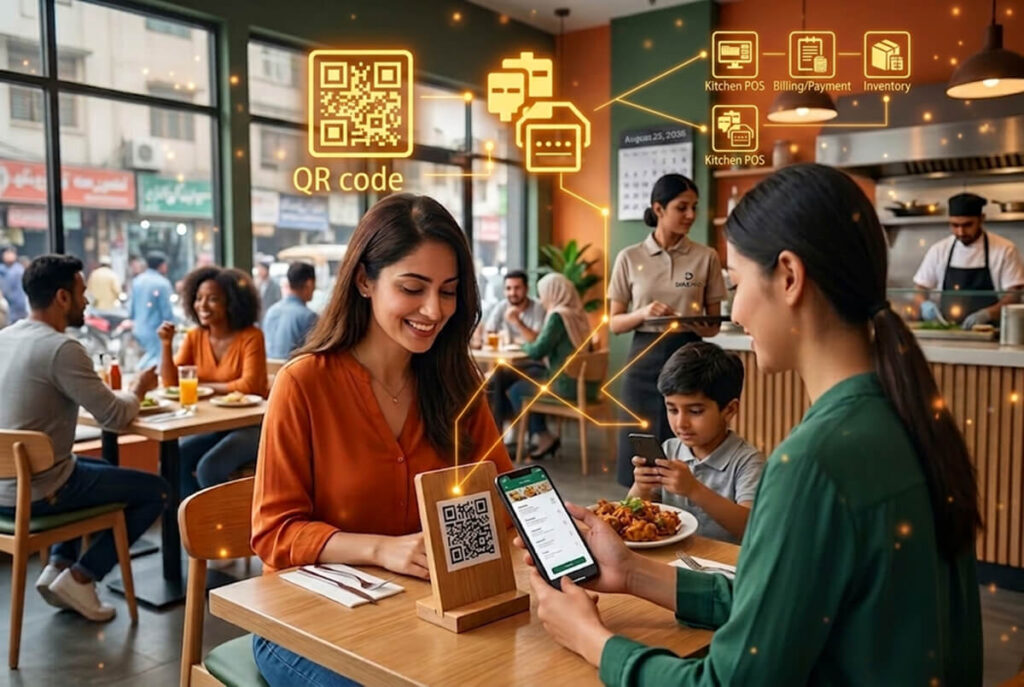
A QR-based menu allows guests to scan a code and view menu information directly from their phones.
This can reduce the need for staff to manually deliver menus to every table.
2. Simplify Ordering
Giving customers convenient ordering options can reduce unnecessary delays.
A QR Ordering System can allow customers to browse the menu and place orders directly from their table.
This can help restaurants process orders more efficiently, particularly during busy periods. DinePro’s QR-based ordering allows customers to access a digital menu and place orders directly from their devices. (Dinepro)
3. Improve Order Tracking
Restaurant staff should know the status of orders at every stage.
Real-time Order Tracking can help teams see which orders have been received, prepared, or served.
This makes it easier to identify delays before customers have to ask about them. DinePro provides real-time order tracking designed to improve visibility and service efficiency. (Dinepro)
4. Streamline Billing
Fast and accurate billing creates a better final impression.
A modern Restaurant POS system can help restaurants manage orders, payments, and sales information more efficiently.
Instead of relying on manual processes, staff can use a centralized system to make billing smoother.
5. Use Restaurant Analytics
Busy periods can create predictable patterns.
Restaurant owners can use sales and operational data to understand:
- Peak hours
- Popular menu items
- Order volume
- Staff performance
- Busy days
- Service bottlenecks
This information can help owners plan staffing and workflows more effectively.
How DinePro Helps Restaurants Improve Service Speed
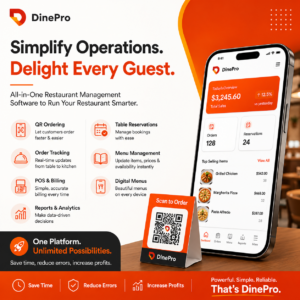
DinePro is designed to help restaurants simplify ordering, order management, billing, and daily operations. Its platform includes QR ordering, real-time order tracking, POS functionality, billing, and analytics. (Dinepro)
For small restaurant owners, the goal is simple: create a more organized workflow so staff can spend less time dealing with manual processes and more time serving customers.
QR-Based Ordering
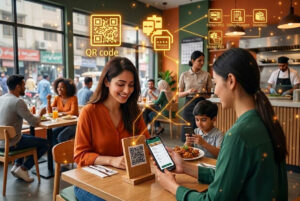
With DinePro’s QR ordering, customers can scan a QR code, browse the digital menu, and place their orders directly from their devices.
This reduces unnecessary waiting for a server to take every order and can make the ordering process more convenient. (Dinepro)
Order Tracking
DinePro’s real-time order tracking helps restaurant teams monitor orders as they move through the process.
Staff can have better visibility into order status, making it easier to identify delays and keep customers informed. (Dinepro)
Restaurant POS and Billing
A Restaurant POS system can help organize orders and payments in one workflow.
DinePro supports POS functionality across devices and combines ordering with billing and other restaurant operations. (Dinepro)
Restaurant Management Software
Modern Restaurant Management Software can bring different parts of restaurant operations together.
Instead of managing ordering, billing, tracking, and reporting through disconnected processes, restaurant owners can use a centralized platform to improve visibility and efficiency.
DinePro is positioned as an all-in-one restaurant management solution covering order processing, reservations, billing, customer service, QR ordering, tracking, and analytics. (Dinepro)
Internal Link: Restaurant Management Software
The Business Benefits of Faster Restaurant Service
Reducing waiting time can provide benefits beyond customer satisfaction.
A smoother operation can help restaurants:
Improve Customer Experience
Customers appreciate convenience. Faster ordering and clearer communication can make the dining experience more enjoyable.
Reduce Staff Pressure
When repetitive manual tasks are reduced, employees can focus more on customers and important operational tasks.
Improve Table Turnover
Efficient ordering and payment can help reduce unnecessary delays between customers.
Reduce Order Errors
Digital ordering can reduce the need for staff to manually write or re-enter customer orders.
Make Better Decisions
Restaurant analytics can help owners identify busy periods and operational bottlenecks.
Together, these improvements can help improve restaurant efficiency without simply asking employees to work faster.
Faster Service Does Not Mean Rushing Customers
There is an important difference between faster restaurant service and rushed service.
Customers do not want to feel pressured.
They want convenience.
A good restaurant workflow allows customers to order when they are ready, receive useful updates, enjoy their meal, and complete payment without unnecessary delays.
Technology should support this experience rather than replace good hospitality.
The objective is to remove avoidable waiting—not remove the personal experience that makes a restaurant special.
Final Thoughts
Customers do not only remember what they ate.
They remember how they felt during the experience.
Long waiting times can create frustration, affect reviews, reduce repeat visits, and put additional pressure on restaurant employees.
For small restaurant owners, learning how to reduce restaurant waiting time can be an important part of improving customer experience and operational efficiency.
The solution is not always hiring more staff or asking employees to work faster.
Sometimes, the better solution is to improve the workflow.
Digital menus, QR ordering, order tracking, POS systems, billing tools, and restaurant analytics can help create a smoother journey from ordering to payment.
When the process works better, customers can spend less time waiting and more time enjoying their meal.
And that is the kind of experience that can make them want to come back.
FAQs
What causes long waiting times in restaurants?
Common causes include manual ordering, poor communication, slow billing, kitchen delays, lack of order visibility, and inefficient workflows.
How can restaurants reduce restaurant waiting time?
Restaurants can reduce waiting time by using digital menus, QR ordering, real-time order tracking, faster billing, and better restaurant operations management.
Do customers care about restaurant waiting times?
Yes. Waiting time can influence customer satisfaction and how customers remember their overall dining experience.
Can QR ordering reduce restaurant waiting time?
Yes. QR ordering allows customers to access a digital menu and place orders directly from their devices, reducing the need to wait for staff to take every order. (Dinepro)
How does order tracking improve restaurant service?
Order tracking gives staff better visibility into order progress. This can help teams identify delays, manage orders more efficiently, and keep customers informed. (Dinepro)
Why is a restaurant POS system important?
A Restaurant POS system can help restaurants organize orders, billing, payments, and sales information in a more efficient workflow.
How does restaurant management software improve efficiency?
Restaurant Management Software can bring ordering, billing, tracking, reporting, and other operational tasks into a more centralized workflow, helping restaurant owners manage their business more effectively.
See how DinePro helps small restaurants simplify ordering, improve restaurant operations management, and create better customer experiences. Start your free trial today.