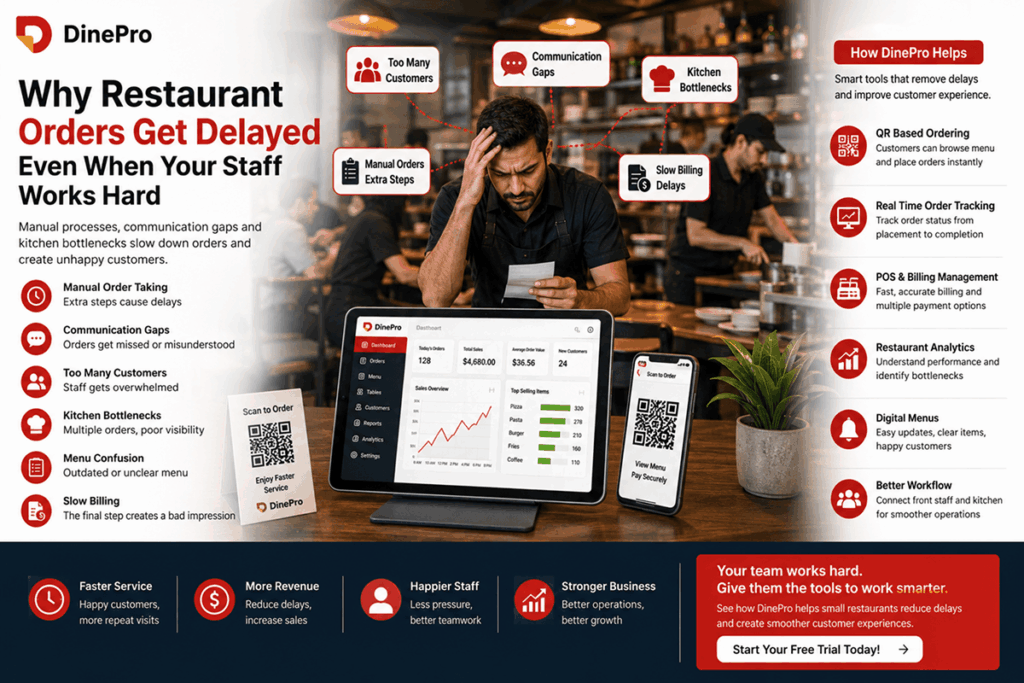
Every restaurant owner wants the same thing:
Happy customers who enjoy their experience and return again.
But achieving this becomes difficult when the ordering process creates unnecessary delays.
A customer does not see everything happening behind the scenes.
They do not see:
- The kitchen managing multiple orders
- Staff handling different tables
- Employees coordinating updates
- The pressure during busy hours
They only experience the final result.
If the order takes too long, the restaurant experience feels slow.
Even when your team is working hard.
The Real Reasons Behind Restaurant Order Delays
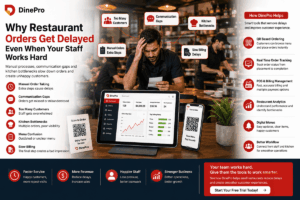
1. Manual Order Taking Creates Extra Steps
Many small restaurants still rely on traditional ordering methods.
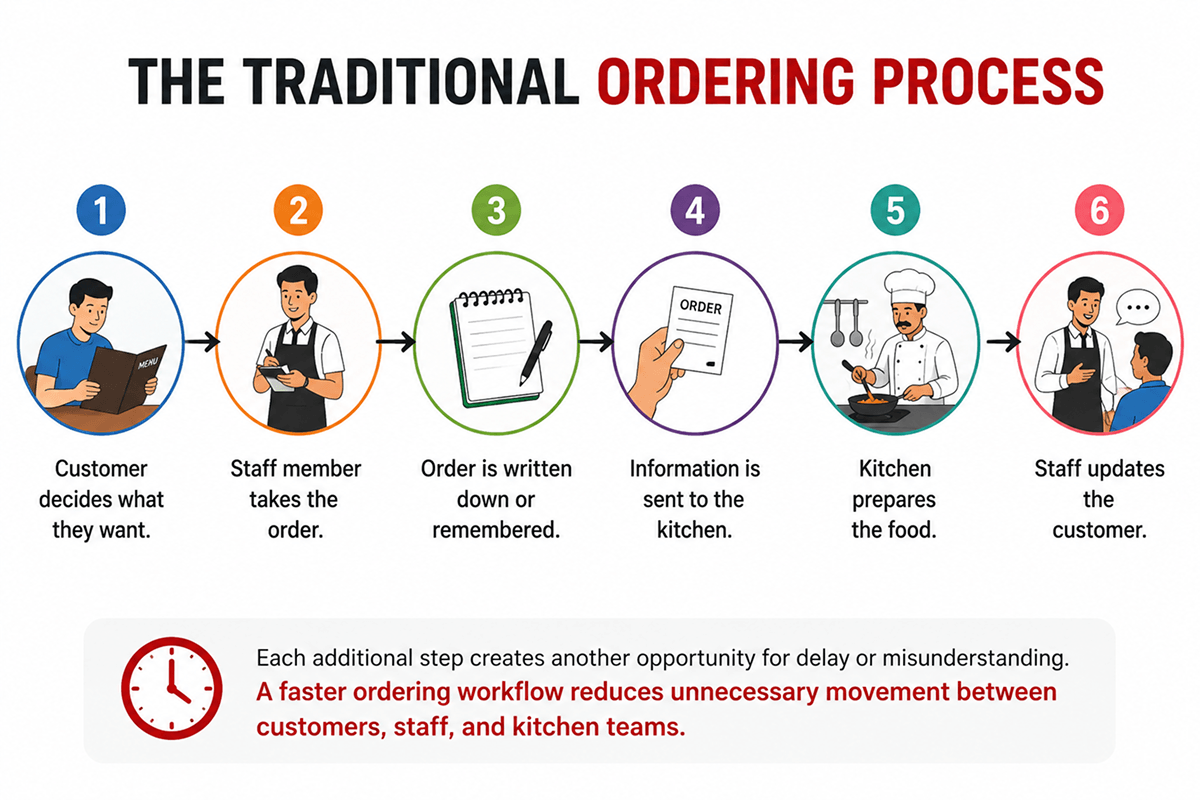
A typical process looks like this:
Customer decides what they want.
↓
Staff member takes the order.
↓
Order is written down or remembered.
↓
Information is sent to the kitchen.
↓
Kitchen prepares the food.
↓
Staff updates the customer.
Each additional step creates another opportunity for delay or misunderstanding.
A faster ordering workflow reduces unnecessary movement between customers, staff, and kitchen teams.
2. Communication Gaps Between Front Staff and Kitchen
Restaurants depend on teamwork.
The front staff and kitchen must always stay connected.
However, communication problems can happen when:
- Orders are unclear
- Changes are missed
- Special requests are forgotten
- Multiple orders arrive together
During busy hours, these small issues become bigger problems.
A customer requesting a simple modification may experience delays because the information did not reach the right person at the right time.
A connected ordering system helps improve communication across restaurant operations.
3. Too Many Customers Waiting for Staff Attention
In a traditional restaurant setup, customers often depend completely on staff.
They wait to:
- Receive menus
- Ask questions
- Place orders
- Request additional items
- Ask for bills
For a small team, managing multiple tables at the same time can be difficult.
Customers today value convenience.
Giving customers simple ways to interact with the restaurant can reduce pressure on staff.
4. Kitchen Bottlenecks Slow Everything Down
Sometimes the delay is not at the table.
The kitchen may face challenges such as:
- Too many orders arriving at once
- Poor order prioritization
- Missing information
- Difficulty tracking order status
Without visibility, restaurant teams may struggle to understand where delays are happening.
Order tracking helps restaurants monitor the journey of each order from placement to completion.
5. Menu Confusion Causes Delays
A confusing menu can slow down ordering.
Customers may spend more time deciding because:
- Items are unclear
- Prices are outdated
- Options are difficult to understand
- Available items are not updated
A digital menu helps restaurants provide clear information and update options whenever needed.
6. Billing Becomes the Final Delay
Many restaurants focus on speeding up food service but forget the final step.
The customer has finished eating.
They are ready to leave.
But they are waiting for the bill.
Slow billing creates a poor final impression.
A smooth restaurant experience includes:
- Fast ordering
- Efficient preparation
- Simple payment
Every step matters.
The Impact of Slow Restaurant Service
Order delays affect more than one customer.
They influence the entire business.
Lower Customer Satisfaction
Customers remember slow experiences.
Even if the food quality is excellent, delays can affect their overall opinion.
Negative Reviews
Customers often share service experiences online.
Waiting times are one of the common reasons customers leave negative feedback.
More Pressure on Employees
When systems are inefficient, staff members have to work harder to achieve the same result.
Lost Revenue Opportunities
Customers who experience delays may:
- Visit less frequently
- Recommend the restaurant less
- Choose competitors
How Small Restaurants Can Improve Order Speed
Improving service does not always require hiring more employees.
Many restaurants can improve by improving their workflow.
Use Digital Ordering
Digital ordering reduces unnecessary steps between customers and staff.
Improve Order Visibility
Restaurant teams should know:
- Which orders are new
- Which are being prepared
- Which are completed
Simplify Billing
A connected billing system reduces manual calculations and payment delays.
Use Data to Identify Problems
Analytics help owners understand busy periods and operational challenges.
How DinePro Helps Restaurants Manage Orders Better
DinePro helps small restaurants create a smoother ordering experience through:
QR Based Ordering
Customers can access menus and place orders easily.
Real Time Order Tracking
Restaurant teams can monitor orders more efficiently.
POS and Billing Management
Orders and payments stay organized in one system.
Restaurant Analytics
Owners gain better visibility into daily operations.
For independent restaurants, the goal is not to remove the human experience.
The goal is to remove unnecessary friction.
Final Thoughts
A hardworking team deserves a system that supports them.
When restaurant processes are slow, employees often receive the blame.
But many delays come from outdated workflows.
By improving ordering, communication, and billing processes, small restaurants can create faster service and happier customers.
The restaurants that improve their operations today will be better prepared for tomorrow’s customer expectations.
FAQs
Why are restaurant orders delayed?
Restaurant orders are often delayed because of manual ordering processes, communication gaps, kitchen bottlenecks, and inefficient billing systems.
How can restaurants reduce order waiting time?
Restaurants can reduce waiting time by using digital ordering, better order tracking, clear communication systems, and efficient billing solutions.
Does technology help small restaurants serve customers faster?
Yes. Restaurant technology helps small restaurants organize operations, reduce manual tasks, and improve service speed.
Your team works hard. Give them the tools to work smarter. See how DinePro helps small restaurants reduce delays and create smoother customer experiences. Start your free trial today.