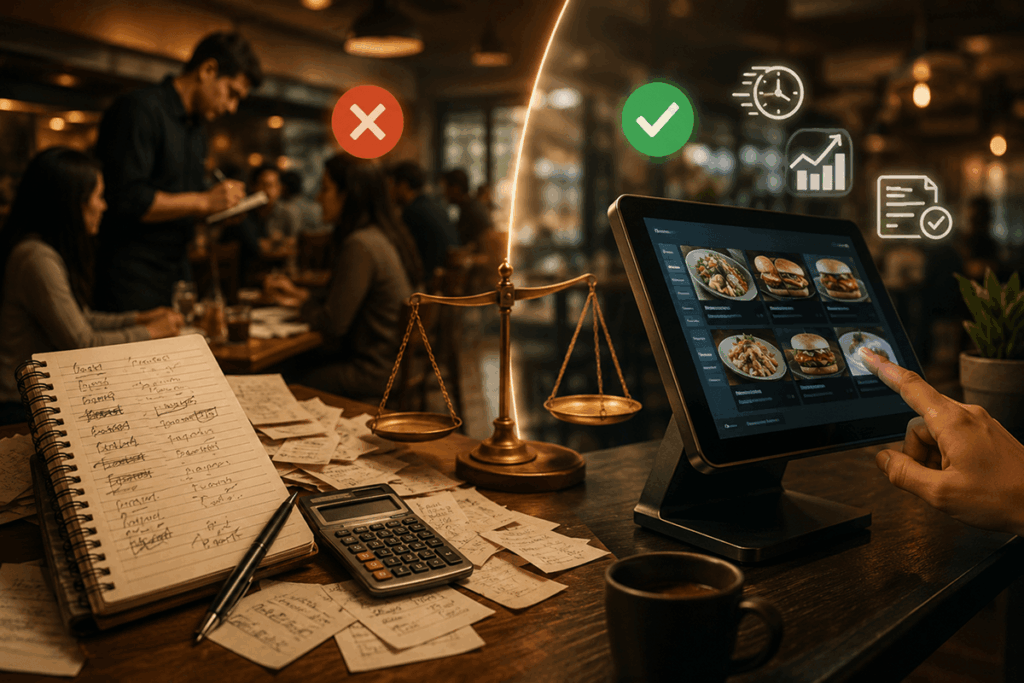
A manual restaurant ordering system can create hidden costs through order mistakes, slow service, billing errors, staff pressure, and limited business visibility. While traditional processes may work for small restaurants, they can become difficult to manage as customer demand grows. Digital menus, ordering, billing, order tracking, and analytics can help restaurants reduce manual work, improve efficiency, and deliver a smoother customer experience.
Many independent restaurants begin with simple processes.
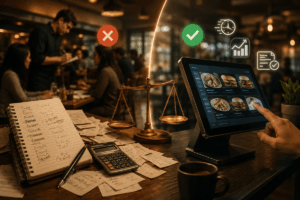
A notebook for orders.
A printed menu.
A calculator for billing.
A team that remembers customer preferences.
At the beginning, these methods may work.
But as customer expectations increase and restaurants become busier, manual systems start creating problems.
The issue is not that traditional methods are wrong.
The issue is that they create limitations when a restaurant wants to improve speed, accuracy, and customer experience.
1. Order Mistakes Cost More Than Food Replacement
One of the biggest hidden costs of manual ordering is mistakes.
A small mistake can create multiple problems:
A customer receives the wrong item.
The kitchen needs to prepare another order.
Staff spends additional time fixing the issue.
The customer becomes frustrated.
The restaurant loses resources.
Common causes include:
- Misheard orders
- Unclear handwriting
- Missing modifications
- Poor communication between staff and kitchen
Each mistake affects both efficiency and customer trust.
A better ordering process helps create clearer communication from the moment a customer places an order.
2. Slow Ordering Reduces Table Efficiency
For restaurants, time matters.
A table that waits too long to order affects the entire customer flow.
Customers may spend time:
- Waiting for a menu
- Waiting for staff availability
- Waiting to place additional requests
- Waiting for confirmation
These delays may seem small.
But throughout a busy day, they affect how smoothly the restaurant operates.
Improving the ordering process helps restaurants serve customers more efficiently.
3. Manual Processes Increase Staff Pressure
Restaurant employees already manage many responsibilities.
They need to:
- Welcome customers
- Take orders
- Answer questions
- Coordinate with the kitchen
- Handle payments
When every task depends on manual effort, staff members spend more energy managing processes instead of serving customers.
This can lead to:
- Higher stress
- Slower service
- More mistakes
- Lower team efficiency
Technology can support employees by simplifying repetitive tasks.
4. Billing Errors Affect Customer Trust
The final interaction a customer has with your restaurant is often payment.
A billing mistake at the end of a good meal can damage the entire experience.
Manual billing may create issues such as:
- Incorrect calculations
- Missing items
- Payment confusion
- Difficulty tracking transactions
Customers expect payments to be quick and accurate.
A digital billing system helps restaurants create a smoother checkout experience.
5. Restaurant Owners Lack Business Visibility
Many restaurant owners check daily sales.
But sales numbers alone do not explain the complete picture.
Without proper reporting, owners may struggle to understand:
- Best selling items
- Busy periods
- Sales patterns
- Operational performance
This makes it harder to make confident business decisions.
Restaurant analytics provide useful insights that help owners understand what is happening inside their business.
6. Menu Updates Become Difficult
Menus change frequently.
Restaurants may need to update:
- Prices
- Available dishes
- Special offers
- Seasonal items
With printed menus, every update requires extra effort.
Problems occur when:
- Customers see outdated information
- Staff has to explain changes repeatedly
- Unavailable items are ordered
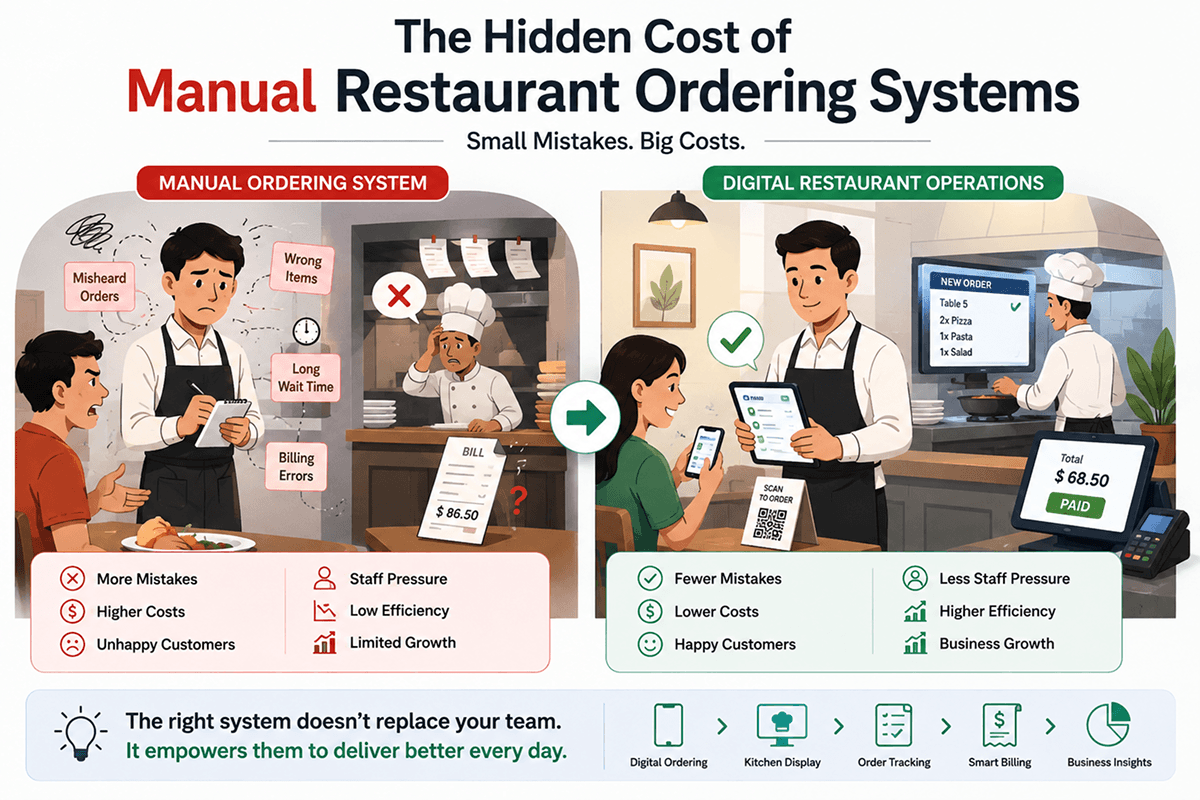
Digital menus allow restaurants to update information quickly and keep customers informed.
7. Manual Systems Limit Restaurant Growth
Many restaurant owners want to grow.
They want:
- More customers
- Better service
- Higher efficiency
- Stronger reputation
But growth becomes difficult when daily operations depend completely on manual processes.
A restaurant should not become more complicated as it becomes more successful.
The right systems allow owners to manage increased demand without creating unnecessary complexity.
Manual Ordering vs Digital Restaurant Operations
| Manual Process | Digital Restaurant Process |
| Staff takes every order manually | Customers can access digital menus |
| More chances for mistakes | Clear order information |
| Limited visibility | Real time tracking |
| Manual billing | Faster digital billing |
| Difficult reporting | Better operational insights |
The goal of technology is not to remove the personal touch of restaurants.
It is to remove the friction that prevents teams from providing better service.
How DinePro Helps Reduce Manual Restaurant Problems
DinePro helps independent restaurants move from disconnected processes to a more organized workflow.
With features like:
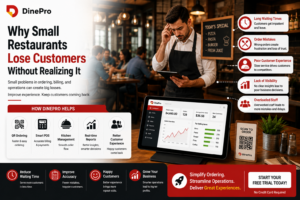
QR Ordering
Customers can view menus and place orders more conveniently.
Menu Management
Restaurant owners can update menus more easily.
POS and Billing
Orders and payments stay organized.
Order Tracking
Teams can monitor restaurant operations better.
Reporting and Analytics
Owners gain more visibility into performance.
By bringing these functions together, DinePro helps small restaurants create smoother daily operations.
Final Thoughts
Manual systems may feel comfortable because they are familiar.
But familiarity does not always mean efficiency.
As customer expectations continue to change, restaurants need better ways to manage ordering, payments, and operations.
Small improvements in restaurant technology can create meaningful improvements in customer experience and business performance.
The question is not whether your current process works.
The question is whether it is helping your restaurant grow.
FAQs
Are manual ordering systems bad for restaurants?
Manual ordering systems can work for small operations, but they often create challenges with accuracy, speed, reporting, and scalability.
How do digital ordering systems help restaurants?
Digital ordering systems reduce manual work, improve order accuracy, and help restaurants provide faster customer service.
Can small restaurants benefit from restaurant technology?
Yes. Small restaurants can use technology to improve efficiency, reduce mistakes, and compete with larger businesses.
Ready to reduce manual work and improve your restaurant operations? Discover how DinePro helps small restaurants manage orders, billing, and customer experiences from one platform. Start your free trial today.