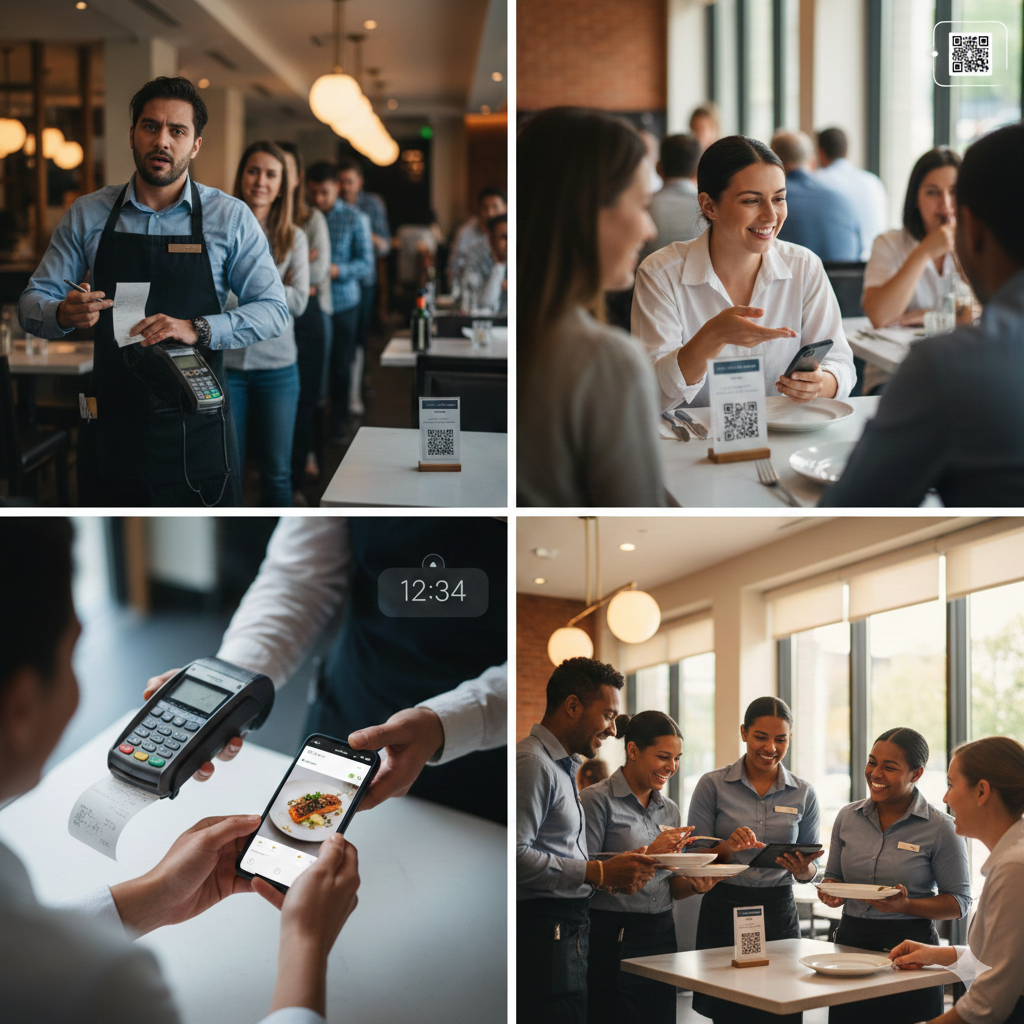
Is your service model driving your best staff away? Learn why “transaction fatigue” is the real reason for restaurant turnover and how digital autonomy is the solution. Let’s dive into Restaurant Staff Retention Strategies 2026.
The “Help Wanted” signs have faded, but the vacancy remains. In 2026, the restaurant industry is facing a paradox: dining out is more popular than ever, yet the pool of people willing to work front-of-house is at an all-time low.
The issue isn’t just wages; it’s the cognitive load. Traditional service models require a single human to be a salesperson, a payment processor, a technical support agent for the POS, and a memory athlete—all while smiling. This is the recipe for the “silent quit.”
The Problem: The High Cost of “Transaction Fatigue”
When we analyze why staff leave the industry, it often comes down to friction-heavy tasks. * The Payment Loop: A server spends an average of 12 minutes per shift just walking back and forth to a stationary POS terminal.
-
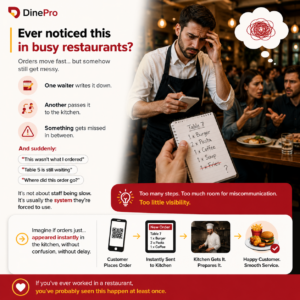
The Order Error Cycle: In a loud, fast-paced environment, manual order entry leads to a 15-18% error rate. These errors don’t just cost food waste; they cost “emotional labor” as servers apologize to frustrated guests.
-
The “Menu Police”: Constantly telling guests that a dish is sold out because the paper menu couldn’t be updated creates a negative feedback loop for the staff.
The Shift: From “Order Taker” to “Hospitality Guide”
Modern restaurants are surviving by adopting the “Silent Service” framework. This isn’t about replacing humans with robots; it’s about removing the robotic tasks from humans.
Restaurant Staff Retention Strategies 2026: By shifting the administrative burden—ordering and payments—to a digital interface like ScanToDinePro, the dynamic of the dining room changes fundamentally:
-
Zero-Error Ordering: When guests control the input, accuracy hits 100%. The server is no longer the “middleman” for mistakes; they are the expert who recommends the wine pairing.
-
The End of the “Bill Dance”: In 2026, guests expect to leave when they are ready. Allowing them to scan and pay at their own pace removes the highest-stress touchpoint for both the guest and the server.
-
Real-Time Transparency: When the kitchen runs out of the “Catch of the Day,” it disappears from the digital menu instantly. No more awkward apologies.
Awareness: Automation as an Employee Benefit
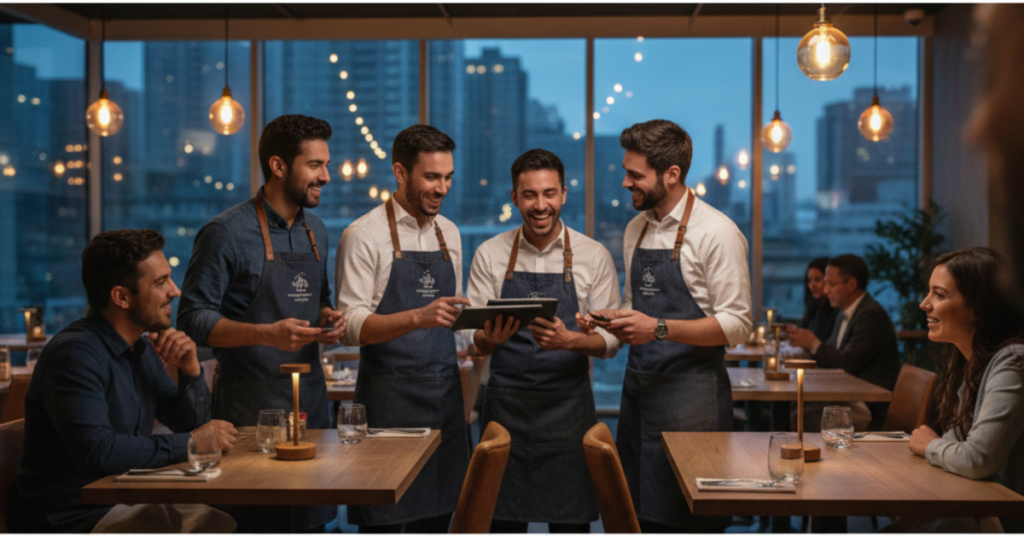
We often talk about technology as a benefit for the owner or the customer. But in today’s labor market, tech is an employee benefit. A server at a ScanToDinePro-enabled restaurant can handle more tables with less physical and mental exhaustion. They make more in tips (because table turnover is 15% faster) and experience less burnout because they aren’t bogged down by “the walk” to the POS.
The 2026 Competitive Edge
The “Invisible Service” layer is the new standard. Restaurants that continue to force their staff to act as manual data-entry clerks will continue to lose their best talent to the competition.
If you want to protect your staff, you have to protect their time. Moving to a digital-first interface isn’t just a tech upgrade; it’s a commitment to the people who keep your kitchen running.
Quick Summary for Owners:
-
Focus: People-First Leadership
-
Problem: High turnover due to “Transaction Fatigue.”
-
Solution: Hospitality Automation via ScanToDinePro to allow staff to focus on guest experience rather than admin tasks.
FAQs
What is “Hospitality Automation”?
Hospitality automation refers to using digital tools—like ScanToDinePro—to handle repetitive, administrative tasks such as taking orders and processing payments. The goal is not to replace human staff, but to free them from “transactional” work so they can focus on “relational” hospitality and guest satisfaction.
How does digital ordering improve staff retention?
Most restaurant turnover is caused by high-stress environments and “Transaction Fatigue.” By allowing guests to scan and order themselves, you remove the pressure of manual data entry from your servers. This reduces errors, speeds up service, and allows staff to manage more tables with less stress, leading to higher tips and higher job satisfaction.
Will guests feel neglected if they order via a QR code?
Actually, the opposite is true. In 2026, guests value autonomy. Providing a digital interface like ScanToDinePro ensures that guests never have to wait to catch a server’s eye just to get a refill or the bill. It allows the server to act as a “Consultant” or “Host” rather than just a “Note-taker.”
Is hospitality automation expensive to implement?
Compared to the cost of hiring and training a new server (which can cost thousands in lost productivity and advertising), digital solutions are highly cost-effective. Systems like ScanToDinePro typically pay for themselves within the first month by increasing table turnover and reducing order waste.